Anyone who has spent a long afternoon working on a stained glass project knows the feeling — your soldering iron has been running for hours, your work surface radiates heat, and the studio temperature has climbed steadily since you started. Managing that residual heat isn’t just about comfort. It directly affects the quality of your work, the longevity of your tools, and the safety of your workspace.
Why Cooling Matters Between Sessions
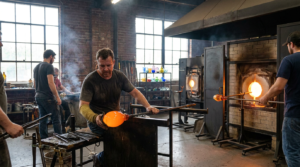 Soldering irons designed for stained glass work typically run between 700°F and 900°F at the tip. Even after you switch them off, the iron and its stand retain dangerous levels of heat for 20 to 40 minutes. Work surfaces — particularly those covered in homosote board, heat-resistant fiber mats, or metal — also hold heat well after the iron is unplugged.
Rushing through cool-down creates real problems. Tips can oxidize and pit if put away while still hot. Storage cases and tool rolls can warp or scorch. And in shared studio spaces, an unattended hot iron is a genuine fire hazard. Building a proper cool-down routine protects your investment and your studio.
Traditional Methods Glass Artists Use
 Most experienced stained glass artists rely on a few time-tested approaches:
Designated cooling stands. A heavy-duty metal soldering stand with a coiled holder keeps the iron elevated and allows air to circulate around the tip. This is the baseline — never set a hot iron directly on a work surface.
Tip cleaning before storage. Wiping the tip on a damp sponge or brass coil cleaner while it’s still warm (but not actively in use) removes flux residue that would otherwise bake onto the tip during cool-down. A clean tip cools more evenly and lasts significantly longer.
Stepped power-down. Some artists turn their irons down to a lower temperature setting 10 to 15 minutes before they plan to stop working, allowing a gentler cool-down rather than an abrupt shutoff.
Ventilation. Opening a window or running a small fan helps dissipate heat from both the iron and the work surface without creating drafts that could affect any final solder joints.
Using Cold Packs to Cool Work Surfaces
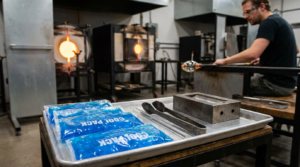 Here’s a practical trick more stained glass artists are adopting: keeping a few cold packs for coolers in the studio freezer specifically for work surface management. After a long session, placing a cold pack on a heat-resistant towel over the work area helps bring the surface temperature down faster, making the space usable again sooner — especially valuable if you’re sharing a studio or working in a small space where ambient heat builds up.
Reusable cold packs like Icepaca packs are ideal for this purpose because they stay cold for hours, don’t leak or sweat onto your tools and glass pieces, and can be refrozen indefinitely. They’re also useful for cooling gel ice wraps for tired hands and wrists after long cutting sessions.
Important note: Never apply a cold pack directly to a hot soldering iron, tip, or recently soldered piece. Rapid cooling can damage the iron’s heating element and cause solder joints to crack. Cold packs are for ambient surface cooling only, used after the iron has cooled naturally.
A few simple cool-down habits will extend the life of your tools, keep your studio safer, and have you ready to pick up where you left off next session.